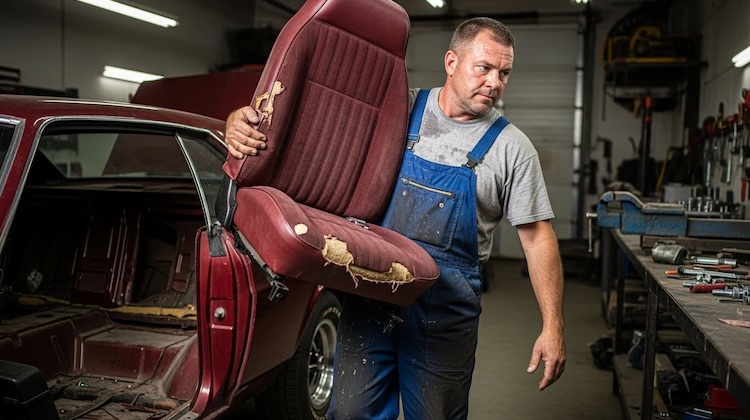
Removing a vehicle’s seat is supposed to be the easiest part of a reupholstery job — four bolts, a few plugs and you’re done.
Unfortunately, it’s not always that simple. Hidden issues can turn what should be a quick removal into a long, costly and frustrating project.
Spotting these issues before quoting a job can save you a lot of stress. Here are eight common issues to look out for:
1. Rusted or Stripped Bolts
A rusted bolt might only require some heat and patience — or it might snap, leaving you with the miserable task of extracting the broken shank from the floorpan. Stripped bolts aren’t much better. They often need specialty sockets or extraction tools to get them out. Either way, it’s more work than expected, so price accordingly.
2. Aftermarket TVs or Electronics in the Headrests
Factory seats are designed with quick-disconnect plugs to make removal simple. Aftermarket installers, however, don’t always follow that logic. Hardwired headrest TVs or electronics can trap a seat in the car unless you cut wires. Always check for this and warn the customer ahead of time that any damage to non-factory electronics isn’t your responsibility.
3. Small Door Openings
Large seats plus small door openings equal trouble. Look for high sill plates, tight door frames and headrests that can’t easily be removed for additional clearance. Power headrests add extra steps, including removing back panels and disengaging tracks. If you’re only redoing the bottom cushion, that’s work you wouldn’t normally have to do — so make sure the quote reflects it.
4. Seats Bolted to Each Other
Some vehicles, especially those with 40/20/40 layouts, have seats that are physically bolted together. That means you can’t remove one without removing — or at least unbolting — the others. It’s not hard work, but it is extra work.
5. Heavy Seats
If you’re a one-man shop, wrestling a big bench seat out the door isn’t just tough on your back — it’s dangerous for the vehicle. One slip can scratch interior panels, door jambs or even exterior paint. Heavy seats slow the job down and add risk, so account for that in your pricing.
6. Non-Functional Seat Tracks
You can’t reach the front and rear bolts unless the seat moves freely. If the tracks don’t slide, you’re stuck diagnosing and repairing that issue before the seat can even come out. Always test the tracks during an estimate.
7. Seats Bolted from Underneath the Vehicle
Some older Mopar and Ford seats unbolt from below. Whether you’re sliding under the car or putting it on a lift, the removal becomes a whole different job. Quote it as such.
8. Aftermarket or Non-Factory Seats
This is the biggest red flag of all. When seats are swapped from a different vehicle, installers often improvise with mismatched bolts, washers, spacers and homemade brackets. Expect to work both inside and underneath the car to sort it all out. Make sure the customer understands that unknown modifications mean unpredictable labor — which will be reflected in the cost.
Even the most seemingly straightforward seat-removal can have hidden issues. A careful inspection during the quote not only protects your time, but also sets clear expectations with customers — which is vital to running a smooth, profitable shop.
Recent Comments