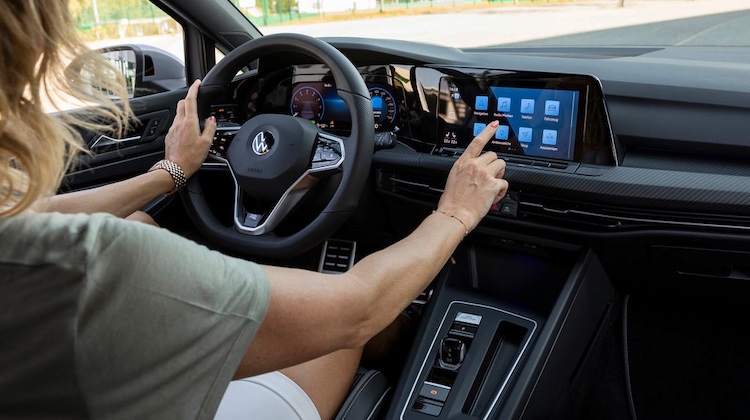
After years of touchscreens taking over dashboards, physical buttons might be making a comeback.
According to reporting cited by Kelley Blue Book, regulators in major international markets are starting to push back on touchscreen-heavy interiors, arguing that scrolling through menus for basic functions can distract drivers.
None of the current rules apply in the United States. But since automakers often build the same vehicles for multiple global markets, stricter requirements overseas can eventually influence the cars sold here.
In Europe, automakers are already rethinking interior design after changes from the European New Car Assessment Programme (Euro NCAP), the region’s independent vehicle safety testing program. Under updated evaluation rules, cars will need physical controls for several key functions — including turn signals, windshield wipers, hazard lights, the horn, and emergency SOS — in order to qualify for the coveted five-star safety rating.
Manufacturers can still rely heavily on touchscreens if they want, but they’ll lose points in their Euro NCAP evaluation. While the ratings aren’t required by law, they carry major marketing weight across Europe and can strongly influence buyers.
The reasoning is simple: making drivers dig through touchscreen menus to access basic controls can increase distraction.
“The thinking is that the risk of crashes increases as drivers hunt through touchscreen menus to access basic functions,” according to reporting cited by Kelley Blue Book from Automotive News Europe.
Some automakers are already adjusting. Volkswagen has moved away from an all-touch interface in its new ID Polo, a model not sold in the U.S. Meanwhile, newer versions of the Mercedes-Benz GLC and Mercedes-Benz CLA feature steering wheels with a mix of switches, rotary controls, and traditional buttons.
European automakers will have about three years to redesign interiors if they want their vehicles to qualify for Euro NCAP’s top safety score.
And Europe might just be the beginning. According to reporting by Bloomberg, similar requirements could eventually become law in China, potentially pushing the industry even further back toward physical controls.
Recent Comments