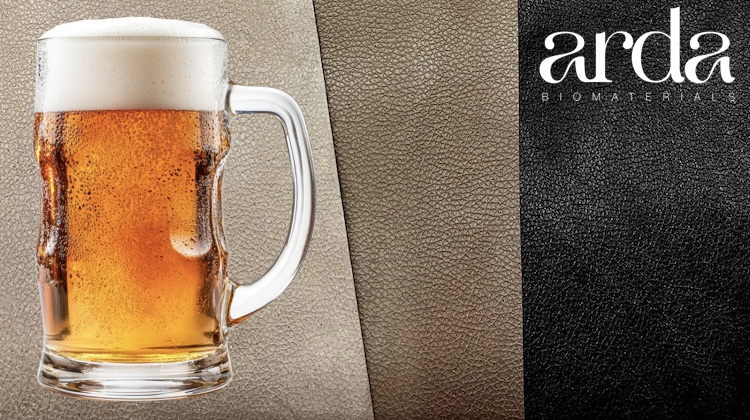
You can’t drink and drive, but soon you’ll be able to drive your drink… well, sort of.
UK startup Arda Biomaterials has raised $5.25 million in seed funding to scale a leather- and plastic-alternative material made from spent barley — the grain left behind after brewing beer or distilling spirits.
Rather than relying on animal hides or petroleum-based synthetics, Arda collects this discarded grain from breweries and distilleries and uses a proprietary chemical process to extract and restructure its proteins. The result is a leather-like material engineered to replicate the fibrous structure found in traditional hides.
Arda says the approach eliminates two major environmental drawbacks common in today’s upholstery materials: industrial livestock production and plastic waste. The company positions its material as a potential replacement for both natural leather and synthetic leather alternatives.
Its first commercial product, called New Grain, is aimed at applications in fashion and automotive interiors, where consistency, durability and scalable supply matter.
The new investment will allow Arda to expand into a production facility roughly five times larger than its current operation, a key step toward serving high-volume customers. According to cofounder and CEO Brett Cotten, a single large brewery could supply enough raw material to produce between 5 and 10 million meters of finished material annually.
For now, Arda sources spent grain from Anheuser-Busch breweries around London. But not all grain performs the same. Different brewing recipes affect the characteristics of the feedstock, including color and texture.
Darker beers, such as stouts, use roasted barley that naturally carries deeper pigments. Arda can preserve those tones to produce darker materials without additional dyes. Lighter beers, including lagers and IPAs, result in lighter brown finishes.
Because the material does not rely on animal hides, Arda is able to bypass traditional tanning processes. The company says this shortens the supply chain and reduces the chemical treatments and coatings typically required for leather.
While Arda is initially targeting fashion brands, Cotten recently told AgFunderNews that automotive interiors represent “the highest caliber of material to go after” — and the ultimate test.
Recent Comments